Central America

Guatemala

Guatemala coffee grows mostly washed on high, often volcanic slopes, and each of its regions has a recognisable style, from the soft sweetness of Antigua to the bright, fruit-led cups of Huehuetenango.

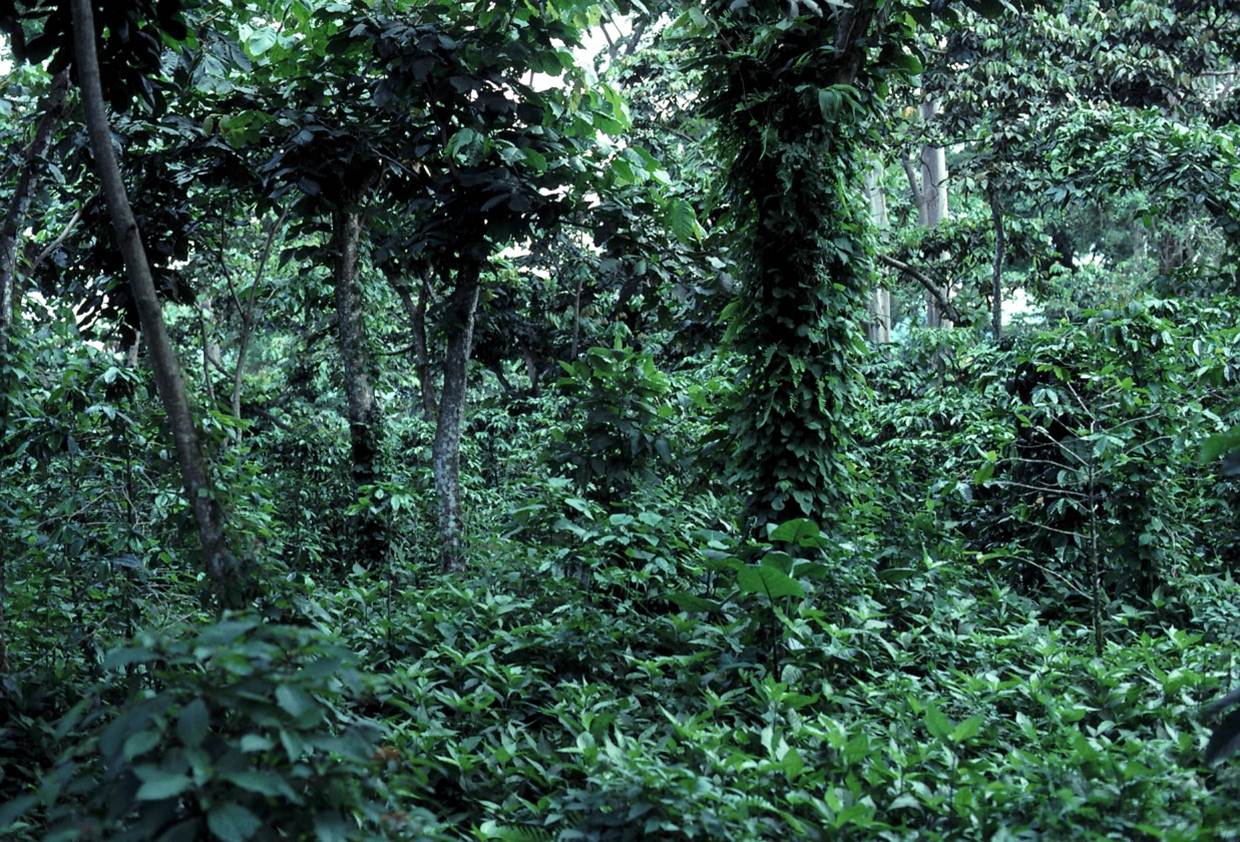
Coffee shrubs growing under a canopy of shade trees on a traditional coffee plantation in Guatemala
Photo: John Blake · Public domain · source
At a glance
RegionsAntigua, Huehuetenango, Atitlán, Acatenango, Cobán, Fraijanes, San Marcos, Nuevo Oriente
Altitude1,300–2,000 m
HarvestSeptember to April
VarietiesBourbon, Caturra, Catuaí, Typica, Maragogype, Pache
ProcessingWashed
Typical flavourschocolate, nutty, toffee, lemony acidity, citrus, malic acidity, floral, fruit-forward, full body, sweet, smooth
In the registry
1212 beans
Process
  • Washed9
  • Natural2
  • Anaerobic natural1
Roast
  • Light5
  • Medium-light1
  • Medium3
  • Dark2
Often noted
dark chocolatebrown sugarcherrycitrusappleberrybig berrycaramel

Roasters Frothy Monkey Coffee Roasters, Intelligentsia, Blue Bottle Coffee, Coffee Bros, Counter Culture, Evans Brothers Coffee, Klatch Coffee, Peet's Coffee

The story

Coffee arrived in Guatemala in the late 18th century, according to the importer Cafe Imports, but it only became a serious crop in the 1860s. At that point the country's main export, the blue dye indigo, had failed. The government encouraged European immigrants to set up plantations and handed out seeds and young plants. By the late 1800s Guatemala was shipping close to 300 million pounds of coffee a year.

Today coffee is still a big part of rural life. Cafe Imports puts the number of people involved at around 500,000, and most farms are small, from 1 to 50 hectares. Many growers belong to one of the country's more than 20 recognised indigenous groups. Some work alone, and others sell through cooperatives. In 1960 growers formed their own union, which became Anacafé, the national coffee association. It runs research, helps with marketing and offers loans to farmers.

Recent years have been hard. From 2012, an outbreak of coffee leaf rust, a fungus that attacks the leaves, cut yields by as much as 25 percent, and the government declared a state of emergency. Farmers pruned harder, thinned shade trees and replaced vulnerable varieties such as Bourbon, Caturra and Catuaí with more resistant plants. Anacafé has worked with World Coffee Research on variety trials since then.

For a fairly small country, Guatemala has many distinct coffee regions. Cafe Imports lists Acatenango, Antigua, Atitlán, Chimaltenango, Cobán, Fraijanes, Huehuetenango and Nuevo Oriente, and Coffee Review also describes San Marcos. Antigua is the best known. It is a valley ringed by three volcanoes, Agua, Fuego and Acatenango, with farms mostly between 1,300 and 1,600 metres. Huehuetenango, near the Mexican border, has the highest farms in the country, reaching about 2,000 metres, with dry, rugged mountains. Atitlán's farms sit on the steep volcanic slopes around Lake Atitlán. Cobán has moist weather shaped by the Caribbean, San Marcos faces the Pacific and is wetter, Fraijanes is a high plateau with a sunny harvest season, and Nuevo Oriente, on the Honduran border, is cloudy and rainy.

Coffee Review notes that most regions have volcanic soil, but not all. Huehuetenango, for example, has limestone soil. Small growers dominate in Huehuetenango and Atitlán, where difficult terrain often keeps farms isolated, and many of their coffees are grown organically by cooperatives.

How it's processed

A coffee bean is the seed of a small fruit called a cherry. Once the cherries are picked, the fruit has to come off and the seed has to be dried.

In Guatemala the usual method is washed processing. The skin is removed, the sticky fruit layer underneath is cleaned away, and the beans are then dried. Cafe Imports describes Guatemalan coffee as washed or mechanically demucilaged, which means some mills use a machine to scrub off the sticky layer instead of letting it ferment away in tanks. Either way, the result is a clean cup where the region and variety show through.

Guatemala also grades its coffee by altitude. Strictly Hard Bean (SHB) is grown at about 1,600 to 1,700 metres, Fancy Hard Bean at 1,500 to 1,600 metres, and Hard Bean at 1,350 to 1,500 metres.

The harvest runs from about September to April. Common varieties are Bourbon, Caturra, Catuaí, Typica, Maragogype and Pache. Pache is a local one: World Coffee Research records it as a natural, compact mutation of Typica found in 1949 on a farm in Santa Rosa.

What it tastes like

Guatemalan coffee tends to balance sweetness with clear acidity. Coffee Review's Kenneth Davids sorts it into two broad styles: delicate, balanced cups that often have floral and fruit notes, and cups with more intense, simpler acidity. He also notes that dry weather during ripening usually means a sweeter coffee, and higher farms usually bring more acidity and nuance.

The regions differ in ways you can often taste. Cafe Imports describes Antigua coffees as sweet and smooth, with lower acidity, which makes them handy in blends. Atitlán coffees are described as nutty and chocolatey, with a lemony acidity and some floral notes. Huehuetenango coffees tend to be the most fruit-forward, with crisp apple-like and citrus acidity, a full body and toffee sweetness. Nuevo Oriente's steady, cloudy climate is said to give full-bodied, well-balanced coffee.

These are tendencies, not rules. The farm, the variety and the roast all shape the final cup, so the tasting notes on each coffee are the best guide.

Growing regions

  • Antigua – Volcanic valley ringed by Agua, Fuego and Acatenango; farms mostly 1,300-1,600 m; sweet, smooth, lower acidity
  • Huehuetenango – Dry mountains near the Mexican border; highest farms, up to about 2,000 m; fruit-forward with crisp acidity
  • Atitlán – Steep volcanic slopes around Lake Atitlán; windy and wet; nutty, chocolatey, lemony acidity
  • Acatenango – Listed growing region; Acatenango is also one of the three volcanoes around Antigua
  • Cobán – Moist, Caribbean-influenced weather
  • Fraijanes – Old, high plateau with a sunny harvest season; few lots reach the US
  • San Marcos – Wetter, Pacific-facing mountains
  • Nuevo Oriente – Small eastern region on the Honduran border; cloudy and rainy; full-bodied and balanced

Coffees from Guatemala

12 coffees
Blue Bottle CoffeeImage coming soon
Whole bean
Blue Bottle Coffee

Guatemala Antigua Vandaluz

Guatemala · Washed
RoastMedium
Notes: brown sugar, plum, rose
Typical price$$$ · $1.95–2.45/ozSee details →
Counter CultureImage coming soon
Whole bean
Counter Culture

Sipacapa

Guatemala · Washed
RoastLight
Notes: apple, simple syrup, cocoa
Typical price$$$ · $1.95–2.45/ozSee details →
Evans Brothers CoffeeImage coming soon
Whole bean
Evans Brothers Coffee

Guatemala Andrés Recinos Pérez

Guatemala · Washed
RoastLight
Notes: watermelon candy, peach, citrus
Typical price$$$$ · $2.45+/ozSee details →
Frothy Monkey Coffee RoastersImage coming soon
Whole bean
Frothy Monkey Coffee Roasters

Guatemala Blue Ayarza

Guatemala · Washed
RoastLight
Notes: mixed nuts, dark chocolate, golden raisin
Typical price$$$ · $1.95–2.45/ozSee details →
Frothy Monkey Coffee RoastersImage coming soon
Whole bean
Frothy Monkey Coffee Roasters

Guatemala Blue Ayarza Anaerobic

Guatemala · Anaerobic natural
RoastLight
Notes: cordial cherry, chocolate sourdough, mulled wine
Typical price$$$ · $1.95–2.45/ozSee details →
IntelligentsiaImage coming soon
Whole bean
Intelligentsia

El Diablo Blend

Guatemala · Washed
RoastDark
Notes: dark chocolate, cherry, raisin
Typical price$ · Under $1.60/ozSee details →
Klatch CoffeeImage coming soon
Whole bean
Klatch Coffee

Guatemala Huehuetenango Rio Azul

Guatemala · Washed
RoastMedium
Notes: sweet, citrus, nuts, brown sugar
Typical price$$$ · $1.95–2.45/ozSee details →
Peet's CoffeeImage coming soon
Whole bean
Peet's Coffee

Guatemala Linda Vista

Guatemala · Washed
RoastDark
Notes: dark chocolate, caramel, cardamom
Typical price$ · Under $1.60/ozSee details →
VerveImage coming soon
Whole bean
Verve

Guatemala La Nueva Montaña Natural Farmlevel Reserve

Guatemala · Natural
RoastLight
Notes: yellow plum, Rainier cherry, orange wine
Typical price$$$$ · $2.45+/ozSee details →
VolcanicaImage coming soon
Whole bean
Volcanica

Guatemala Antigua Coffee - USDA Organic

Guatemala · Washed
RoastMedium
Notes: berry, green apple, jasmine, sweet lemon
Typical price$ · Under $1.60/ozSee details →
IntelligentsiaImage coming soon
Whole bean
Intelligentsia

Guatemala Milder Velásquez

Guatemala · Washed
RoastRoast not stated
Notes: red apple, cherry, orange
Typical price$$$ · $1.95–2.45/ozSee details →
Coffee BrosImage coming soon
Out of stockWhole bean
Coffee Bros

Guatemala | El Socorro | Pacamara Natural

Guatemala · Natural
RoastMedium-light
Notes: big berry
Typical price$$$ · $1.95–2.45/ozSee details →

How to brew it

Its beans are most often recommended for:

Questions people ask

What does Guatemalan coffee taste like?

It tends to pair sweetness, such as chocolate or toffee, with clear citrus or apple-like acidity. Antigua coffees are often softer and smoother, while Huehuetenango coffees are often brighter and more fruit-led.

What does SHB mean on a Guatemalan coffee?

Strictly Hard Bean. It is a grade for coffee grown at about 1,600 to 1,700 metres. Lower grades are Fancy Hard Bean and Hard Bean.

When is coffee harvested in Guatemala?

The harvest runs from about September to April.

Sources